Single-Sided Axle vs Dual-Support Permanent Magnet DC Motors: Performance Comparison and Application Guide for Electric Go-Karts
WWTrade
2026-01-23
Industry Research
This article provides a technical, application-focused comparison between single-sided axle (single-bearing) and traditional dual-support permanent magnet DC motors as used in electric go-karts. It examines core design principles and quantifies how structural differences affect torque transmission efficiency, mounting simplicity, running stability, noise generation, and thermal management. The analysis contrasts typical racing and recreational duty cycles to identify which architecture better meets specific performance and durability requirements. To increase practical value, the piece recommends selection criteria, installation considerations and maintenance implications, and it cites third-party expert opinion and empirical test findings. Readers are guided to visual aids—schematics, a side-by-side comparison table and infographics—to support decision-making for motor selection and vehicle tuning.
Single-Side (Cantilever) Shaft PMDC Motors vs. Traditional Dual-Support Designs — Performance Comparison for Electric Karting
A technical, application-driven review of structural implications for power delivery, installation, stability and acoustic control in electric go-karts and leisure vehicles.
Why structural support matters for kart motors
Structural support geometry in permanent-magnet direct-current (PMDC) motors substantially affects mechanical load paths, heat transfer, NVH (noise, vibration, harshness) and the vehicle integration workflow. For electric kart designers and retrofitters, the choice between a single-side (cantilevered) shaft mounting and a conventional dual-bearing support on either side of the rotor is not purely packaging. It drives trade-offs across dynamic response, serviceability and long-term reliability under race and amusement-park duty cycles.
Design principles: Single-side vs dual-support explained
Single-side (cantilever) shaft configuration
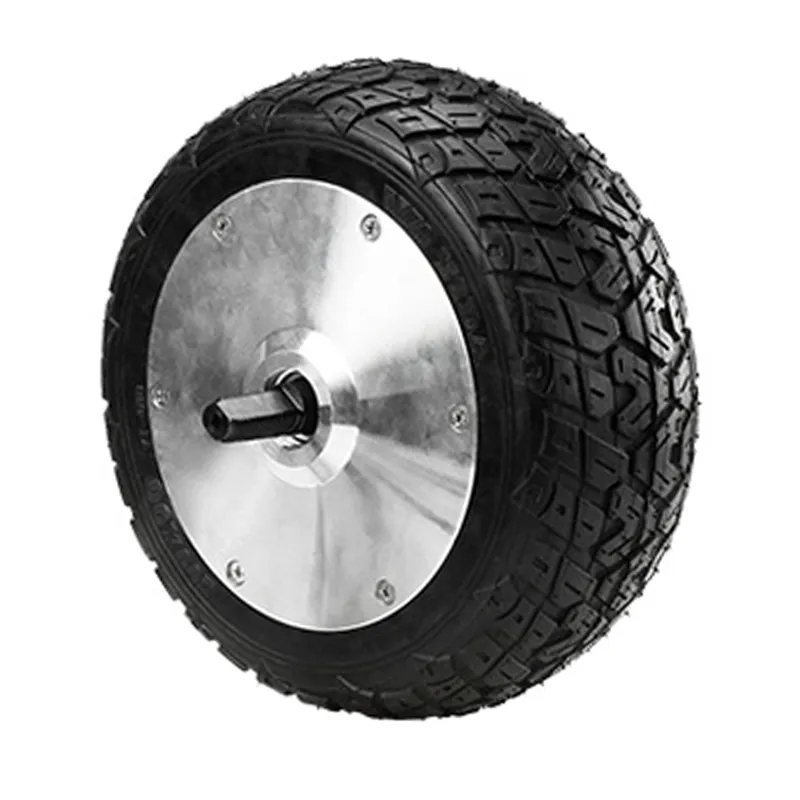
In a single-side shaft layout the rotor is supported by a bearing(s) located on one end of the motor housing, while the other end either integrates directly with a hub, sprocket or is free for direct-drive coupling. This arrangement reduces frontal bulk and simplifies mounting to asymmetric frames (common on lightweight karts and e-kart conversions).
Constraints: higher cantilever bending moments on the supported bearing under lateral loads; potential for increased shaft deflection and uneven wear if not countered by stiff design or appropriate materials.
Dual-support (traditional) layout
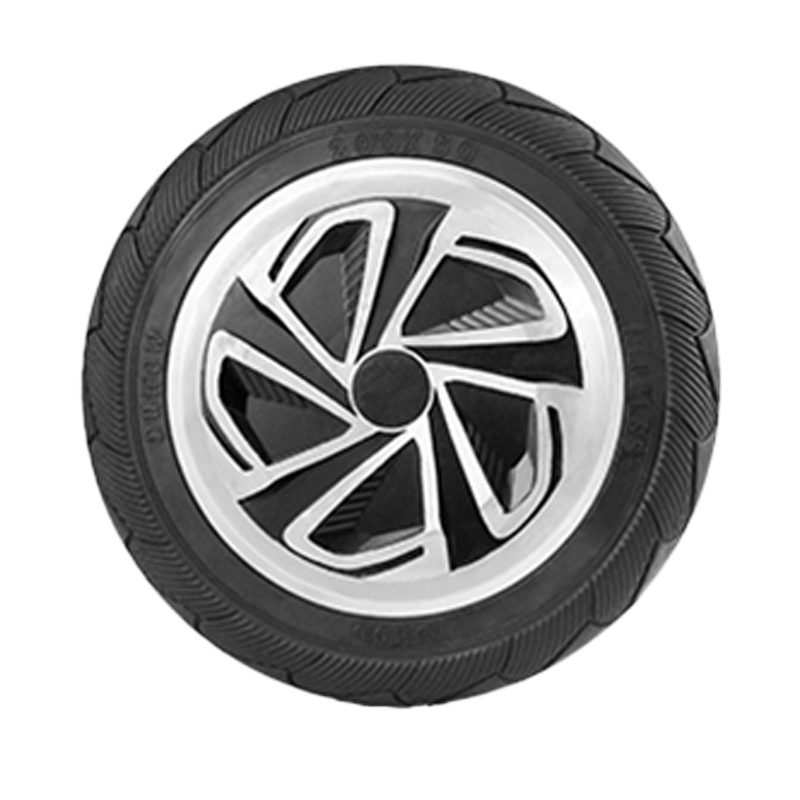
Dual supports position bearings on both sides of the rotor, providing balanced load distribution and reduced bending stresses. This is the conventional choice for applications where sustained high lateral loads, long service intervals and strict NVH targets are prioritized.
Advantages: improved shaft stiffness, predictable bearing life, superior damping of lateral forces — beneficial for competitive karting where sustained cornering loads are high.
Constraints: larger package envelope, slightly increased mass and more complicated installation in asymmetric chassis layouts.
Quantified performance comparison (typical small PMDC kart motors)
The following table synthesizes typical, field-observed performance indicators for single-side and dual-support PMDC motors in electric kart use. Values are representative ranges for small to mid-power motors (1–8 kW class) under typical kart operating conditions (sporadic high torque, frequent acceleration/deceleration).
Metric
Single-side (Cantilever)
Dual-support (Traditional)
Peak drivetrain efficiency (system-level)
~86–90%*
~88–91%*
Rotor stiffness / deflection under lateral load
Lower (higher deflection risk at >1.5 kN lateral)
Higher (negligible deflection up to ~2.5 kN)
Installation time (typical retrofit)
Shorter by ~15–30% vs dual-support
Longer due to alignment steps
Acoustic signature (broadband noise)
Slightly higher at mid-frequencies (1–3 kHz)
Lower with symmetric damping
Thermal dissipation (frame-coupled cooling)
Depends on housing; compact routing can reduce convective area
Generally better surface area balance for heat spreading
Maintenance frequency (bearing replacement)
Higher under extreme lateral loading cycles
Lower; extended intervals with balanced load
*System-level efficiency accounts for electrical losses and drivetrain coupling. Small variation depends on coupling method (direct hub, sprocket, CV).
Application-driven selection: race vs leisure kart scenarios
Competitive/Endurance Racing
Racing karts experience aggressive lateral loads, frequent high-RPM operation and high duty factors. Here the mechanical stiffness, bearing life and NVH control of a dual-support motor usually outweigh the packaging benefits of single-side designs. Reduced shaft deflection helps maintain consistent torque transfer and predictable handling feedback, important when lap-to-lap consistency matters.
Leisure rental tracks and retrofit kits
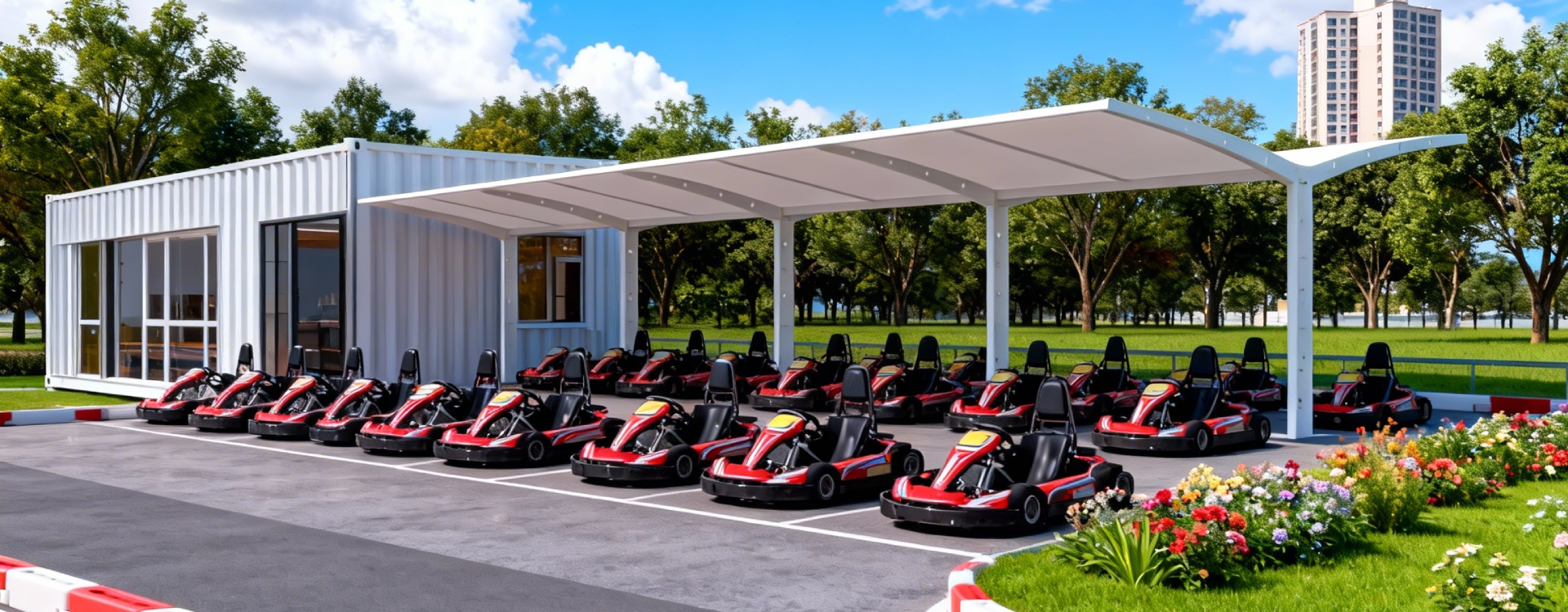
For amusement or leisure karts, priorities shift to serviceability, compact retrofits and lower system mass for easier handling by staff. Single-side motors have clear advantages: simplified mounting brackets, faster wheel/training-side access and fewer mating tolerances — all beneficial for fleet operations where rapid turnarounds and easy replacements reduce downtime.
A rational selection process evaluates operating loads, target lifecycle and integration constraints. When a single-side motor is preferred for packaging or service reasons, certain measures reduce its structural drawbacks:
Increase shaft diameter or use stepped-hardened shafts to improve bending stiffness without a major mass penalty.
Specify grease- or oil-lubricated bearings with higher dynamic load ratings and suitable seals for impregnated rental environments.
Design a rigid, triangulated mounting tab on the chassis to minimize moment arms; add a secondary support (lightweight stays) if cornering loads exceed the design envelope.
Apply vibration-isolating mounts or tuned dampers to control mid-frequency noise caused by cantilever resonance.
Optimize housing fins and thermal vias for forced-air paths in compact installations to maintain thermal headroom under sprint duty cycles.
“For retrofits where chassis asymmetry constrains packaging, the cantilevered PMDC motor—when engineered with a reinforced shaft and higher-rated bearing set—delivers excellent serviceability without sacrificing meaningful efficiency. The key is to design for the expected lateral load spectrum, not the hypothetical maximum,” said an industry senior motor engineer with two decades advising kart suppliers.
NVH and thermal behaviour: what operators should watch
Single-side designs can exhibit increased mid-frequency noise and localized heating when the mounting interface is not adequately stiffened. Dual-support motors distribute heat more evenly across the housing and are less sensitive to localized chassis conduction paths. In practice, telemetry and acoustic spot checks during prototype validation reduce in-service surprises: a 30–60 minute shakedown under representative loads typically reveals bearing heating and resonance issues.
For rentals/fleet operations prioritizing uptime and simple maintenance, single-side offers lifecycle advantages if bearings are specified accordingly.
For conversions with constrained space or when weight saving is a hard requirement, single-side eases integration and reduces part-count.
Always validate thermal behavior on-vehicle; bench efficiency does not guarantee chassis-coupled cooling adequacy.
Case illustration & SEO relevance
In a field retrofit program for a leisure kart fleet (vehicle mass ~110 kg, motor nominal 3.5 kW), swapping a conventional dual-support motor for an engineered single-side PMDC unit reduced assembly time by approximately 25% and simplified wheel-side maintenance. Bearing life projected to be within acceptable limits after the installation of a higher dynamic-rating bearing and light chassis reinforcement.
SEO note: content targeting keywords such as "single-side cantilever PMDC motor", "dual-support motor comparison", "electric kart motor selection", "motor torque transfer efficiency" and "kart motor cooling" should include practical benchmarks and installation guidance to capture both search-intent informational queries and early-stage commercial research.
Next engineering steps
For project teams at the awareness stage: evaluate in-chassis load spectrums, prepare a short list of mounting alternatives and request bearing-rating options from motor suppliers. Prototype one unit with instrumentation (temperature sensors and accelerometers) and run a scheduled duty cycle test to validate the chosen architecture before fleet rollout.